
How to Increase Testosterone Naturally in India?
The most effective natural ways to increase testosterone are reducing chronic cortisol elevation, improving deep sleep quality, correcting Vitamin D deficiency, and supporting the hormonal axis with clinically studied adaptogens — particularly Ashwagandha and Shilajit. In the Indian context, all four of these factors are simultaneously compromised in most urban men over 35 — making the testosterone decline faster and more symptomatic here than in many Western populations.
Why Testosterone Declines Faster in Urban Indian Men
India presents a uniquely challenging hormonal environment for men. Chronic occupational stress is higher and longer-lasting than global averages. Vitamin D deficiency — directly correlated with testosterone levels — affects over 70% of urban Indians despite abundant sunshine, due to indoor work culture and skin coverage. Sleep quality is poor across Indian cities, with late-night screen exposure and early work commutes compressing the deep sleep stages where testosterone synthesis peaks. And dietary zinc and selenium — critical minerals for testosterone production — are often insufficient in vegetarian-dominant Indian diets.
The result is a man whose testosterone is being suppressed from multiple directions simultaneously. Treating one factor in isolation while the others remain active produces limited results.
The Most Effective Natural Approaches — With Evidence
1. Reduce Cortisol First
This is the step most men skip. Testosterone and cortisol are inversely regulated — when cortisol is chronically elevated, the body actively downregulates testosterone production as a survival-prioritisation mechanism. No testosterone-boosting herb, exercise routine, or dietary change will produce full results if cortisol remains high. Ashwagandha at 300–600 mg of root extract daily has randomised controlled trial evidence for meaningful cortisol reduction in chronically stressed adults.
2. Correct Vitamin D Deficiency
A study published in Hormone and Metabolic Research found a strong positive correlation between Vitamin D levels and testosterone in men — men with sufficient Vitamin D had significantly higher testosterone than deficient men. Given that over 70% of urban Indians are Vitamin D deficient, this is one of the highest-yield interventions available and costs almost nothing to address. Get your levels tested; supplement under physician guidance if below 30 ng/mL.
3. Prioritise Deep Sleep
Approximately 70% of daily testosterone release in men occurs during sleep — specifically during deep sleep and REM stages. Consistently sleeping under 6 hours, or sleeping 7–8 hours of poor-quality sleep, meaningfully reduces testosterone. This is not a marginal effect — research shows that one week of sleep restriction to 5 hours reduced testosterone levels in young healthy men by 10–15%. Valerian Root and Ashwagandha both support sleep architecture without sedation or dependency.
4. Resistance Training — But Not Overtraining
Compound resistance training — squats, deadlifts, bench press — produces the strongest acute testosterone response of any exercise. However, overtraining without adequate recovery raises cortisol more than it raises testosterone and can become net-negative for hormonal health. Two to three sessions of resistance training per week with full recovery between sessions is the optimal frequency for testosterone support.
5. Herbal Support: Ashwagandha + Shilajit Combination
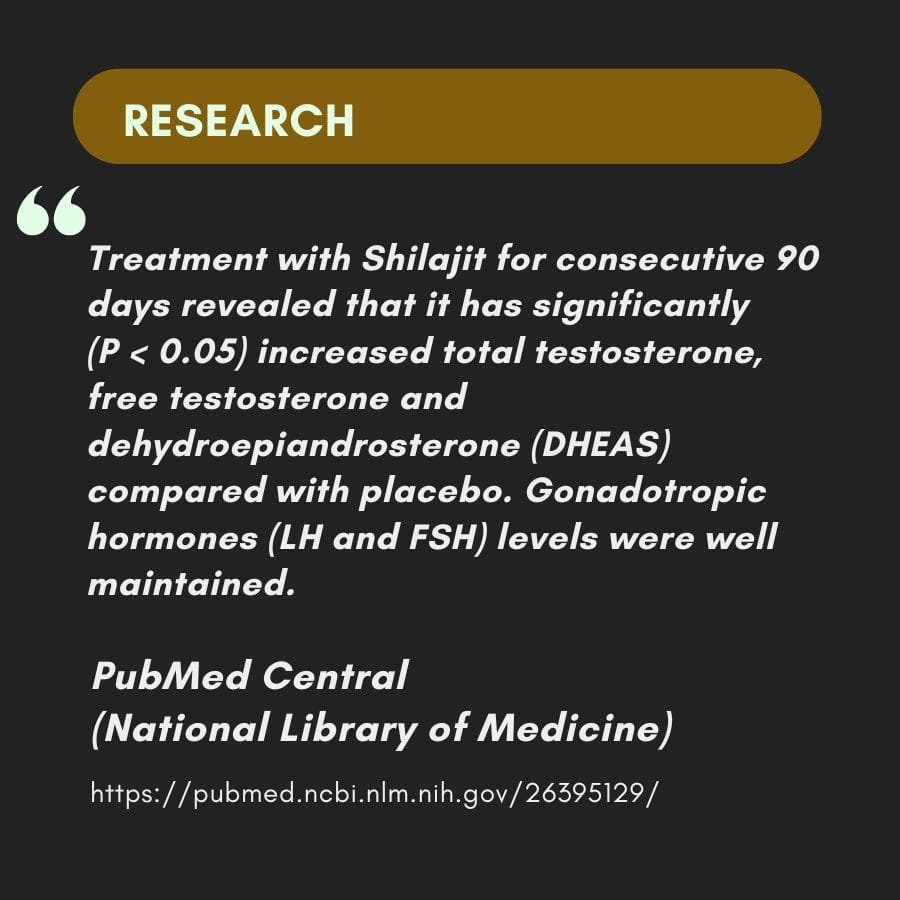
Individually, both herbs have clinical evidence for testosterone support. Together, they address different parts of the hormonal pathway — Ashwagandha removes the cortisol suppression barrier while Shilajit directly supports testosterone synthesis through its fulvic acid complex. A randomised controlled trial found Shilajit supplementation significantly increased total testosterone, free testosterone, and DHEAS compared to placebo after 90 days.
The Role of Diet in Natural Testosterone Support
Zinc is essential for testosterone synthesis — deficiency directly impairs the enzyme that produces testosterone from cholesterol. Best Indian dietary sources: pumpkin seeds, sesame, whole dals, and eggs. Selenium supports thyroid-testosterone interaction and is found in Brazil nuts, sunflower seeds, and fish. Healthy fats — ghee, coconut, egg yolks, nuts — provide the cholesterol substrate from which all steroid hormones including testosterone are built. Very low-fat diets are consistently associated with lower testosterone levels.
You can read more about how the cortisol-gut-thyroid axis affects overall hormonal health in our post on the thyroid-gut-cortisol connection.
Sensoriom Yoddha as Daily Testosterone Support
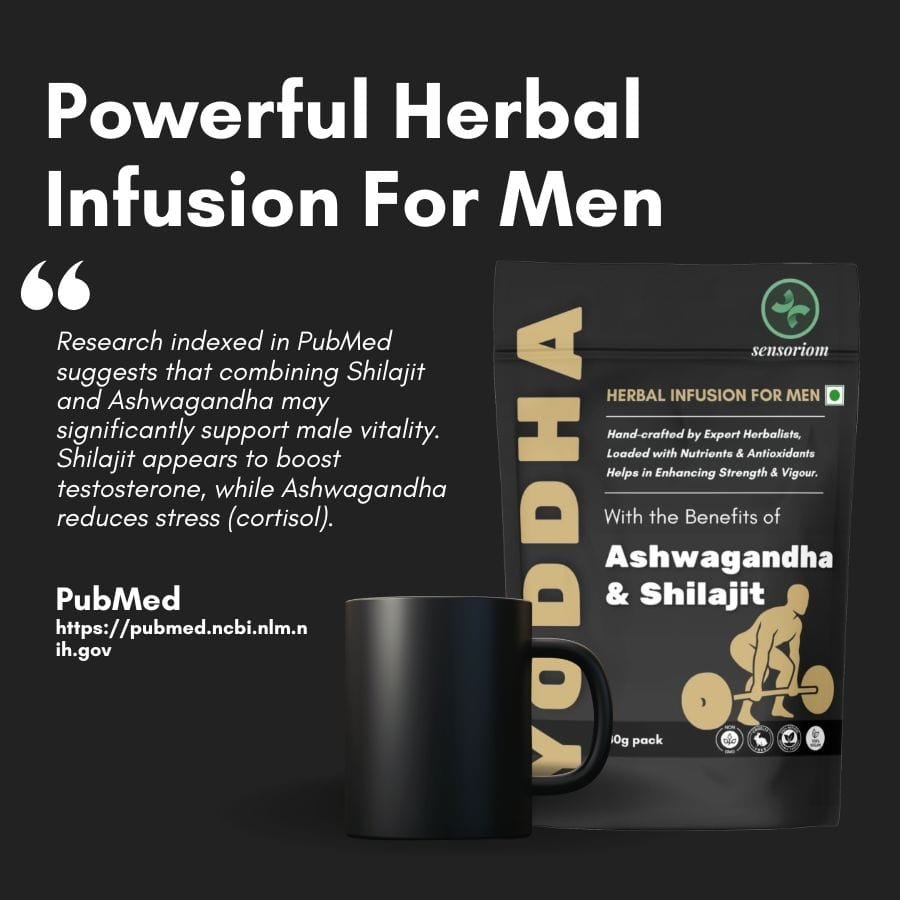
Sensoriom Yoddha addresses natural testosterone support through all the herbal mechanisms simultaneously — cortisol reduction via Ashwagandha, direct testosterone support via Shilajit, luteinising hormone stimulation via Gokhru, sleep restoration via Valerian Root, and cellular antioxidant support via Rooibos. It is a physician-formulated caffeine-free daily infusion built for the Indian man’s hormonal and metabolic reality.
Frequently Asked Questions
What is the fastest natural way to increase testosterone?
Correcting Vitamin D deficiency and improving sleep quality produce the fastest measurable results — often within 4–6 weeks. Ashwagandha begins reducing cortisol within 2–3 weeks, which allows testosterone to recover progressively. There is no overnight solution — the hormonal system responds to consistent inputs over weeks, not days.
Does exercise increase testosterone permanently?
Resistance training raises testosterone acutely after each session and supports healthy hormonal levels over time, but it does not permanently alter your testosterone set point. The gains are maintained only with continued training. Overtraining — especially without adequate recovery — can raise cortisol enough to suppress testosterone net, particularly in men over 40.
Which Indian foods naturally boost testosterone?
Eggs, pumpkin seeds, sesame seeds, garlic, ashwagandha in milk (traditional Ayurvedic preparation), and ghee are among the best Indian dietary sources of testosterone-supporting nutrients. Garlic contains allicin, which has been shown to reduce cortisol in animal studies. Ghee and egg yolks provide the dietary fat and cholesterol substrate required for steroid hormone synthesis.
This article is for informational purposes only and does not constitute medical advice. Please consult a qualified healthcare professional before making changes to your diet or health regimen.
Author: Dr. Navneet Goyal, MBBS, DNB | Harvard Business School | University of Geneva