Does Ashwagandha Increase Testosterone?
Yes — ashwagandha does increase testosterone, but not by directly stimulating hormone production. It works by reducing cortisol, the stress hormone that actively suppresses testosterone when chronically elevated. When cortisol comes down, the hypothalamic-pituitary-gonadal axis — the hormonal chain that signals testosterone production — is no longer inhibited, and testosterone levels recover naturally. A randomised controlled trial published in Medicine found that men taking ashwagandha root extract showed significantly higher testosterone levels and improved sperm quality compared to placebo after 90 days.
The Cortisol-Testosterone Relationship Most Men Do Not Know About
Most men assume low testosterone is a primary problem — the testes simply producing less. In reality, for the majority of urban Indian men under 50, the suppression is secondary. Chronically elevated cortisol from work stress, poor sleep, and unrelenting pressure signals the body to prioritise survival over reproduction. Testosterone — expensive to produce metabolically — gets downregulated as a result.
This is why no amount of gym work fully compensates for unmanaged stress. Exercise raises testosterone acutely, but if cortisol remains chronically high, the net hormonal environment stays suppressed. Ashwagandha breaks this cycle at the root — at the HPA axis level — rather than attempting to force testosterone production directly.
What the Clinical Research Actually Shows
The evidence on ashwagandha and testosterone is more robust than most people realise. A study in the Journal of the International Society of Sports Nutrition found that resistance-trained men taking ashwagandha showed significantly greater increases in muscle strength, muscle recovery, and testosterone levels compared to placebo over eight weeks. The researchers attributed this to both cortisol reduction and direct modulation of reproductive hormone signalling.
A separate clinical trial found that ashwagandha supplementation improved sperm concentration, motility, and testosterone levels in men with stress-associated fertility issues — again pointing to the cortisol pathway as the primary mechanism.
Ashwagandha Alone vs. A Full Hormonal Support Blend
Ashwagandha addresses the cortisol barrier to testosterone production. But testosterone synthesis itself also requires adequate luteinising hormone signalling, quality deep sleep for nocturnal hormonal repair, and mitochondrial energy to fuel the process. Ashwagandha handles the first piece. Herbs like Gokhru, Shilajit, and Valerian Root address the remaining mechanisms.
This is why Sensoriom Yoddha combines Ashwagandha with Shilajit, Gokhru, White Musli, and Valerian Root in a single daily infusion — each herb working on a different part of the hormonal system. Shilajit alone has been studied in a randomised controlled trial showing significant increases in total testosterone, free testosterone, and DHEAS compared to placebo after 90 days. Together, the combination is more effective than ashwagandha in isolation.
For men also experiencing fatigue and disrupted sleep alongside low drive, our post on why you wake up at 2–3 AM explains the cortisol-sleep cycle in detail.
Frequently Asked Questions
How long does ashwagandha take to increase testosterone?
Clinical studies show meaningful hormonal changes at 8–12 weeks of consistent daily use. Some men notice improved energy and stress resilience earlier — within 2–3 weeks — as cortisol begins to reduce. Testosterone changes measured via blood work typically become evident at the 90-day mark.
Can ashwagandha raise testosterone in older men?
Yes. The cortisol-suppression mechanism through which ashwagandha works applies regardless of age. However, men over 45 with significantly low testosterone due to primary hypogonadism — where the testes themselves are underperforming — will see more limited results and should consult an endocrinologist alongside any herbal support.
Is KSM-66 the best form of ashwagandha for testosterone?
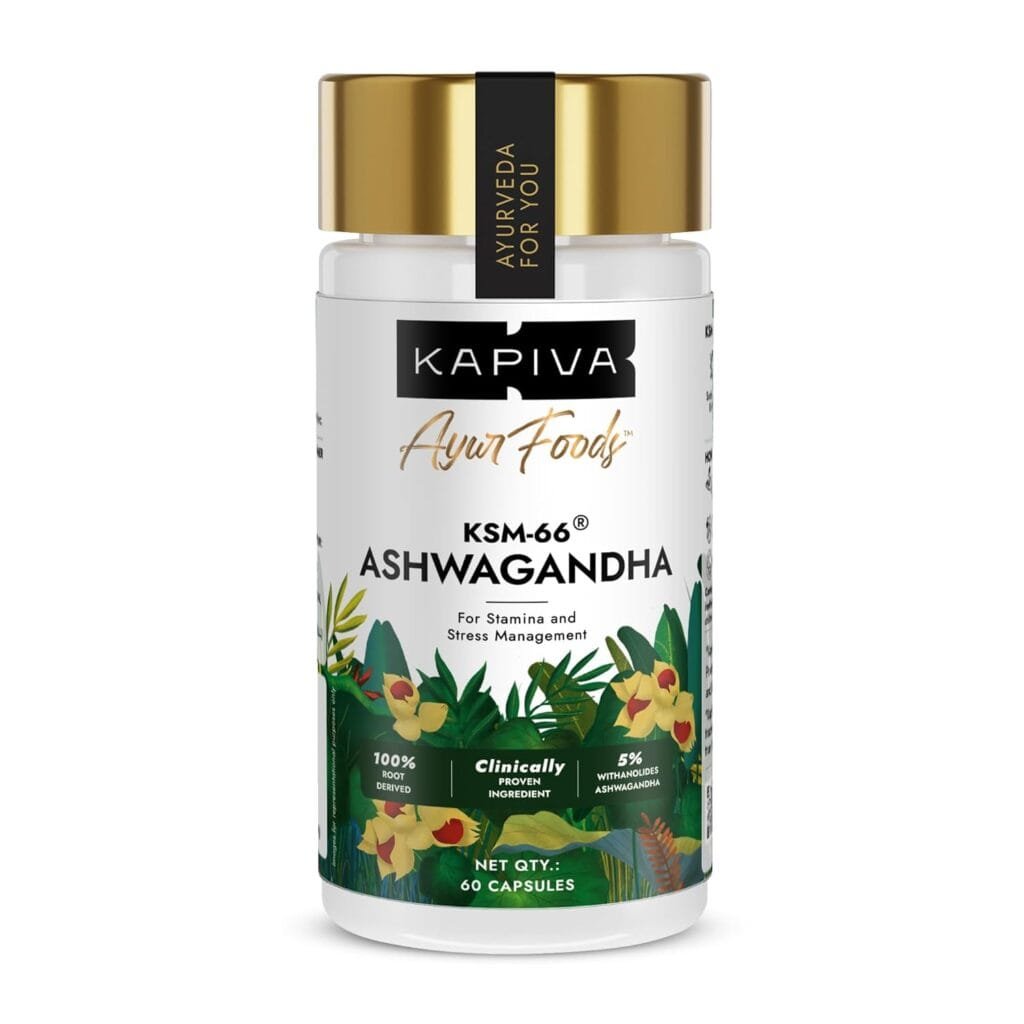
KSM-66 is the most extensively studied ashwagandha root extract and appears in the majority of clinical trials showing hormonal benefits. If you are choosing an ashwagandha supplement specifically for testosterone support, KSM-66 is the most evidence-backed form available.
This article is for informational purposes only and does not constitute medical advice. Please consult a qualified healthcare professional before making changes to your diet or health regimen.
Author: Dr. Navneet Goyal, MBBS, DNB | Harvard Business School | University of Geneva