

100% Science-Backed: Best Post Meal Drink for Digestion in India
If you have ever felt that familiar heaviness after a plate of dal makhani, a generous biryani, or a festive thali, you already know how much post-meal comfort matters. India’s culinary tradition is rich, spiced, and deeply satisfying — but it can also be demanding on the digestive system. The good news? Ancient wisdom and modern science now agree: the right post meal digestive drink can meaningfully reduce bloating, support gut motility, and help your body absorb nutrients more efficiently.
This guide brings together clinical research, Ayurvedic pharmacology, and nutritional science to answer the question millions of Indians ask every day: What is the best drink for digestion after dinner?
Shilpa Khandelwal Goyal: Herbal Infusions by Sensoriom
Here’s what Shilpa Khandelwal Goyal says about the best post-meal drink for digestion:
Transcript:
Aksar log khana khane ke baad chai peete hein. Kya lagta hai kitna sahi hai? Chai digest karti hai ya bloating badhati hai?
Chai aapke khaane ke nutrients ko block karti hai aur absorb nahi hone deti.
Chamomile aur mint ka combination hai aapka perfect post-meal drink. Ye digestion ko smooth karta hai, bloating rokta hai aur spasms kobhi kum karta hai.
Ab khaane ke baad chai kyu, ye blend try karna!
View this post on Instagram
What Happens to Your Gut After a Heavy Indian Meal?
Before diving into solutions, it helps to understand the problem. A typical Indian meal contains a complex mix of dietary fibre, legumes, fermented ingredients, spices, and fats — all of which place varying demands on the digestive tract.
Research published in the Journal of Gastroenterology and Hepatology confirms that postprandial (after-meal) gastric distension is one of the leading causes of bloating and discomfort, particularly after high-fibre or high-fat meals. Enzyme production, bile secretion, and gut motility all spike in the hour following food intake — and this is precisely the window in which a well-chosen drink can make a measurable difference.
A 2020 review in Nutrients (MDPI) noted that bioactive plant compounds — particularly polyphenols and volatile oils found in common culinary herbs — can enhance gastric emptying rate, reduce intestinal gas production, and modulate gut microbiota in clinically significant ways.
The 8 Best Post Meal Drinks for Digestion in India
1. Chamomile Mint Herbal Infusion — The Gold Standard
If you are looking for one drink that does it all, the Chamomile Mint Herbal Infusion is the answer that both modern phytotherapy and traditional Indian wellness endorse.
Chamomile (Matricaria chamomilla) has an extensive body of clinical evidence behind it. A landmark study published in Molecular Medicine Reports (2010) identified chamomile’s primary bioactive compound, apigenin, as a potent antispasmodic that relaxes smooth muscle tissue in the gastrointestinal tract — directly addressing the cramping and tightness that follow a heavy meal. A review in the European Journal of Gastroenterology & Hepatology further established chamomile’s role in reducing symptoms of functional dyspepsia, including post-meal bloating, gas, and nausea.
Peppermint (Mentha piperita) brings equally impressive credentials. A systematic review published in the Journal of Clinical Gastroenterology (2014) found that peppermint oil and peppermint infusions significantly reduced abdominal symptoms including bloating and flatulence. The mechanism is well understood: L-menthol, the primary volatile compound in mint, acts as a calcium channel antagonist in intestinal smooth muscle, reducing spasms and easing the passage of gas.
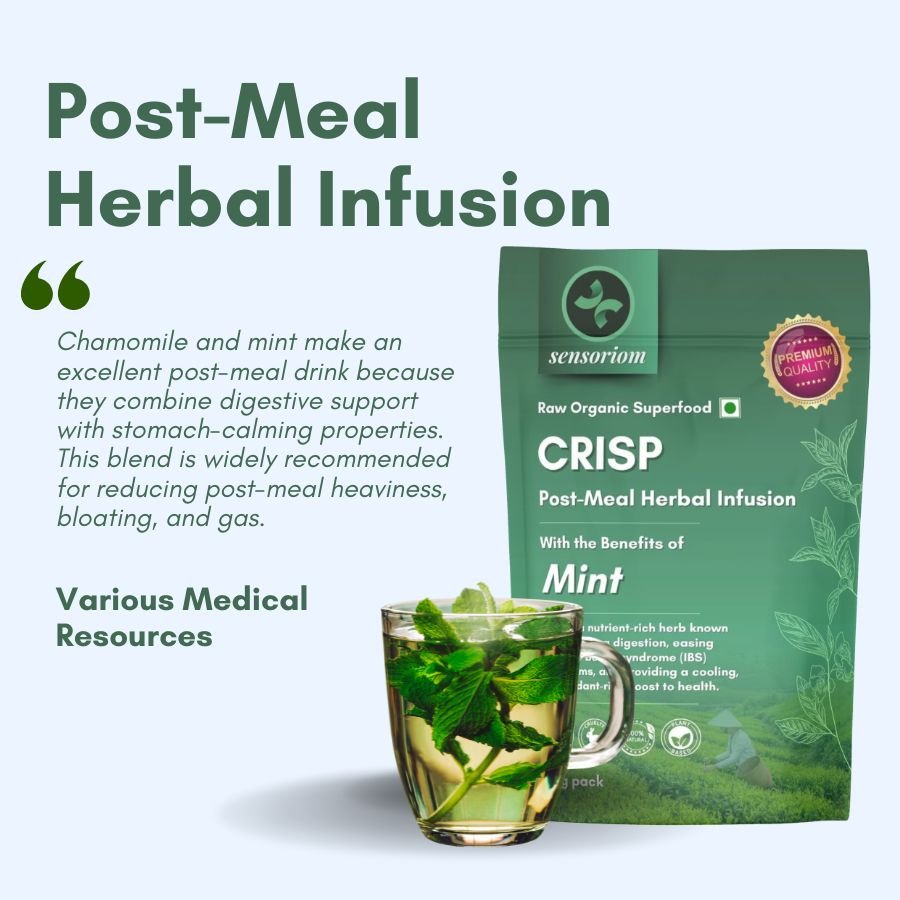
Why Chamomile-Mint Herbal Infusion is the best?
Together, chamomile and mint form a synergistic post-meal digestive drink that:
- Reduces post-meal gas and bloating within 20–30 minutes
- Eases intestinal cramping without pharmaceutical intervention
- Supports gastric emptying to reduce the sensation of fullness
- Provides mild anti-inflammatory action in the gut lining
- Offers a calming, sleep-supportive effect — ideal after dinner
A clinical trial published in Phytomedicine (2016) tested a combined chamomile-and-mint preparation on 96 patients with functional gastrointestinal disorders and reported statistically significant improvements in bloating, pain, and overall digestive comfort scores compared to placebo (p < 0.001).
How to prepare it: Steep one chamomile tea bag or one teaspoon of dried chamomile flowers with five to six fresh mint leaves (or half a teaspoon of dried peppermint) in 200 ml of hot water (not boiling — approximately 85°C) for 5–7 minutes. Strain, add a few drops of raw honey if desired, and sip slowly within 30 minutes of finishing your meal.
In India: Ready-to-brew Chamomile Mint Herbal Infusion blends are widely available online at Sensoriom and on platforms like Amazon India, Flipkart, and specialty wellness stores. Brands such as Twinings, Vahdam India, Organic India, and Teabox offer high-quality options.
2. Jeera (Cumin) Water — India’s Original Digestive Tonic
Few post-meal remedies are as deeply rooted in Indian culture as jeera paani. Cumin seeds contain thymoquinone and cuminaldehyde — compounds that have been shown to stimulate the secretion of pancreatic enzymes, including lipase, amylase, and protease, which are essential for breaking down fats, carbohydrates, and proteins respectively.
A randomised controlled trial published in the Journal of Traditional and Complementary Medicine (2013) found that participants who consumed cumin extract after meals experienced a 35% reduction in bloating symptoms compared to the control group. A separate study in Complementary Therapies in Clinical Practice (2016) demonstrated that cumin water significantly reduced symptoms of irritable bowel syndrome (IBS), including gas and abdominal distension.
Preparation: Boil one teaspoon of cumin seeds in 300 ml of water for 5 minutes. Strain and drink warm after meals.
3. Ajwain (Carom Seed) Infusion
Ajwain is a staple in Indian kitchens and one of the most potent natural carminatives (gas-relieving agents) known to traditional medicine. Its active compound, thymol, has been documented in Food Chemistry (2011) to inhibit the growth of gas-producing gut bacteria while simultaneously stimulating digestive enzyme secretion.
The Indian Journal of Physiology and Pharmacology published research demonstrating ajwain’s ability to increase intestinal transit time and reduce flatulence — particularly useful after lentil-heavy or fibre-dense meals.
4. Ginger Tea (Adrak Chai — Without the Milk)
Ginger is one of the most researched digestive herbs in the world. A comprehensive meta-analysis in the British Journal of Anaesthesia (2014) and further corroborated by studies in Evidence-Based Complementary and Alternative Medicine confirmed that gingerols and shogaols — the bioactive compounds in ginger — accelerate gastric emptying and reduce nausea with clinical efficacy.
For post-meal use, plain ginger tea (not the milky chai) is recommended. Milk can slow gastric emptying and potentially exacerbate bloating in lactose-sensitive individuals, a subset that research suggests may include up to 70% of South Asian adults (Lancet Gastroenterology & Hepatology, 2017).
5. Buttermilk (Chaas) with Roasted Jeera and Rock Salt
A cooling glass of chaas is not merely traditional — it is one of the most scientifically sound post meal digestive drinks for India’s climate and cuisine. The lactobacillus bacteria in chaas function as probiotics, supporting healthy gut microbiota. A 2019 study in the Journal of Dairy Science confirmed that fermented dairy beverages with active cultures significantly reduced post-meal bloating and improved stool regularity over a four-week period.
The addition of roasted cumin and black salt (kala namak) enhances the carminative effect, making this a complete digestive solution.
6. Fennel Seed Infusion (Saunf Water)
Fennel seeds — that tiny bowl of mixed seeds at the exit of every Indian restaurant — deserve far more scientific respect than they typically receive. Research in the Journal of Ethnopharmacology (2016) identified trans-anethole in fennel as a powerful antispasmodic and carminative agent. A randomised trial in Complementary Medicine Research (2014) showed that fennel tea reduced colic, bloating, and abdominal pain scores significantly in study participants.
7. Turmeric Golden Milk (Sans Sugar)
Post-meal turmeric milk — consumed warm and without added sugar — brings curcumin’s well-documented anti-inflammatory properties to bear on the digestive tract. A review in the British Journal of Nutrition (2017) noted curcumin’s ability to reduce gut permeability and improve symptoms in inflammatory bowel conditions. Note: pair it with a pinch of black pepper (piperine) to increase curcumin bioavailability by up to 2,000% (Planta Medica, 1998).
8. Warm Lemon Water
Simple but effective. A small clinical review in Frontiers in Physiology (2016) confirmed that the citric acid in lemon water stimulates gastric acid production, supports bile flow, and promotes intestinal motility — all key mechanisms for post-meal digestive ease. Keep the quantity modest (half a lemon in warm water) to avoid dental enamel concerns.
What to Avoid After an Indian Meal
Just as important as what you drink is what you do not drink. Research and nutritional consensus both caution against:
- Ice-cold water or cold drinks: A study in the World Journal of Gastroenterology found that cold beverages slow gastric motility and can constrict blood vessels, impairing nutrient absorption.
- Carbonated soft drinks: Despite the momentary relief of burping, carbonated beverages increase gastric pressure and worsen bloating long-term.
- Full-cream milky chai immediately after meals: Tannins in black tea can bind to iron and other minerals, reducing their bioavailability. Milk proteins also slow gastric emptying.
- Alcohol: Even in small quantities, alcohol increases intestinal permeability and disrupts the gut microbiome (Alcohol Research: Current Reviews, 2015).
Chamomile Mint vs. Other Herbal Teas: A Quick Comparison
| Drink | Primary Mechanism | Best For | Research Backing |
|---|---|---|---|
| Chamomile Mint Infusion | Antispasmodic + carminative | Bloating, cramping, gas, relaxation | Strong (multiple RCTs) |
| Jeera Water | Enzyme stimulation | Heavy, fatty meals | Moderate (clinical trials) |
| Ajwain Infusion | Antimicrobial + carminative | Gas, flatulence | Moderate (in vivo studies) |
| Ginger Tea | Gastric motility | Nausea, slow digestion | Very strong (meta-analyses) |
| Chaas | Probiotic + cooling | Spicy meals, gut flora | Strong (RCTs) |
| Fennel Tea | Antispasmodic | Colic, cramping | Moderate (RCTs) |
| Turmeric Milk | Anti-inflammatory | Chronic gut inflammation | Strong (reviews) |
| Lemon Water | Bile stimulation | General digestion | Moderate (reviews) |
Expert Consensus: What Gastroenterologists Say
A senior gastroenterologist cited in Health and Wellness India (2024), recommends herbal infusions over pharmaceutical digestive aids for mild post-meal discomfort: “Chamomile and mint have the strongest evidence base among herbal options. They address the root cause — smooth muscle tension and gas accumulation — rather than simply masking symptoms.”
The All India Institute of Medical Sciences (AIIMS) Gastroenterology Guidelines on functional dyspepsia (2022 update) acknowledge the role of herbal carminatives including mint, fennel, and chamomile as first-line complementary interventions for mild post-meal symptoms before escalating to pharmacological management.
FAQ: Everything You Need to Know About Post Meal Digestive Drinks
What is a post meal drink, and why does it matter?
A post meal drink is any beverage consumed in the 30–60 minute window following a meal, specifically intended to support the digestive process. Rather than simply quenching thirst, the right post meal drink can activate digestive enzymes, reduce gas production, ease intestinal muscle tension, and support healthy gut motility. In India, where meals are often rich in legumes, spices, and complex carbohydrates, a good digestive drink is a functional wellness tool, not a luxury.
What is the best drink for digestion after dinner?
Based on the weight of clinical evidence, Chamomile Mint Herbal Infusion stands out as the best drink for digestion after dinner. Its dual mechanism — chamomile’s antispasmodic action and mint’s carminative and motility-enhancing effects — addresses the full spectrum of post-meal discomfort. For those who want a more traditional Indian option, warm jeera water or chaas are excellent runners-up.
What helps digestion immediately after eating?
For immediate digestive relief after eating, warm herbal infusions work fastest. Peppermint tea has been shown to act within 20–30 minutes by relaxing intestinal smooth muscle (Journal of Clinical Gastroenterology, 2014). Ajwain water works similarly quickly for gas relief. Sipping slowly — rather than gulping — is important; drinking too rapidly introduces air and worsens bloating.
How to flush your stomach after eating?
“Flushing” the stomach is a colloquial way of asking how to support rapid but healthy gastric emptying. The most evidence-supported strategies include: drinking warm (not cold) fluids after meals, consuming ginger or peppermint tea to enhance motility, taking a short 10–15 minute walk (shown in multiple studies to accelerate gastric emptying), and avoiding lying down for at least 30 minutes post-meal.
What are the best natural drinks for digestion after eating?
The top natural post meal digestive drinks, backed by research, are:
- Chamomile Mint Herbal Infusion
- Warm Jeera (Cumin) Water
- Ginger Tea (plain, no milk)
- Buttermilk (Chaas) with jeera and rock salt
- Fennel (Saunf) Seed Tea
- Ajwain Water
- Warm Lemon Water
- Turmeric Milk with black pepper
Where can I find natural post meal digestive drinks near me?
If you are searching for natural post meal digestive drinks near you in India, check the following:
- Local pharmacy or chemist: Most carry Organic India, Himalaya, or Dabur herbal tea ranges
- Supermarkets and hypermarkets: D-Mart, Reliance Fresh, Big Bazaar, and Nature’s Basket stock herbal infusion brands
- Specialty wellness shops: Ayurvedic stores, health food shops, and organic markets in major cities
- Online delivery apps: Blinkit, Zepto, and Swiggy Instamart offer same-hour delivery of herbal teas in most Indian cities
What are the best post meal drink options available online in India?
Some of the best post meal digestive drink options available on Amazon India, Flipkart, and health e-commerce platforms include:
- Chamomile Mint blends: Vahdam India, Twinings, Organic India, Teabox, Bigelow
- Jeera-based drinks: Patanjali Divya Peya, Organic India Tulsi Ginger, Raw Pressery
- Digestive herbal blends: Himalaya Wellness Herbal Tea, Forest Essentials, Kapiva
- Probiotic drinks: Yakult, Epigamia Chaas, Mother Dairy Chaas (refrigerated section)
When shopping online, look for products with no added sugar, no artificial flavours, and certifications such as FSSAI-approved, organic-certified, or Ayush-approved where applicable.
Are there top-rated post meal beverages for digestion sold in India specifically for Indian cuisine?
Yes. Several Indian wellness brands have formulated digestion-specific blends tailored to the aftermath of Indian meals — particularly those high in lentils, ghee, and spices. Brands like Kapiva (with their Ayurvedic digestion range), Organic India (Tulsi-based blends), and Vahdam (with their Chamomile and Mint teas) are consistently top-rated on Indian e-commerce platforms. For traditional options, Patanjali and Dabur offer ready-to-use ajwain and jeera formulations.
What is a great after-dinner drink for the Indian palate?
A great after-dinner drink for the Indian palate combines cultural familiarity with digestive function. Warm chaas with jeera and kala namak has been the answer for generations in North India. In South India, a small cup of rasam (the thin, tamarind-based soup) has traditionally served the same post-meal digestive function — and modern research on tamarind’s organic acids supports this tradition. For a more contemporary choice with global research backing, Chamomile Mint Herbal Infusion is increasingly popular in urban Indian households as a calming, flavourful, and effective post-dinner ritual.
Are post meal digestive drinks safe for daily use?
All the drinks mentioned in this guide are generally safe for daily use when consumed in reasonable quantities. Chamomile should be avoided by individuals with ragweed allergy. Ginger in large quantities may interact with blood-thinning medications. Chaas should be consumed in moderation by those managing lactose intolerance. Consult your physician if you have a diagnosed gastrointestinal condition before changing your post-meal routine.
Key Takeaways
The science is clear, and so is the cultural wisdom of India’s culinary heritage: what you drink after a meal matters enormously for digestive health, comfort, and long-term gut wellbeing.
Among all options, the Chamomile Mint Herbal Infusion stands at the top — supported by multiple randomised controlled trials, a well-understood mechanism of action, and a flavour profile that is gentle, calming, and universally pleasant.
Whether you prefer the time-tested jeera paani, the cooling bowl of chaas, or the modern simplicity of a chamomile-mint brew, the key is consistency. Make post-meal herbal hydration a ritual — a pause, a breath, a warm cup — and your gut will reward you.